
Field notes: Peru 2025 - Incahuasi
In November, we finally had the chance to spend time in Peru, more precisely, the Incahuasi Valley. We have featured a few lots from this area before through our friends APU Coffee, and wanted to create a deeper connection with the region and producers.
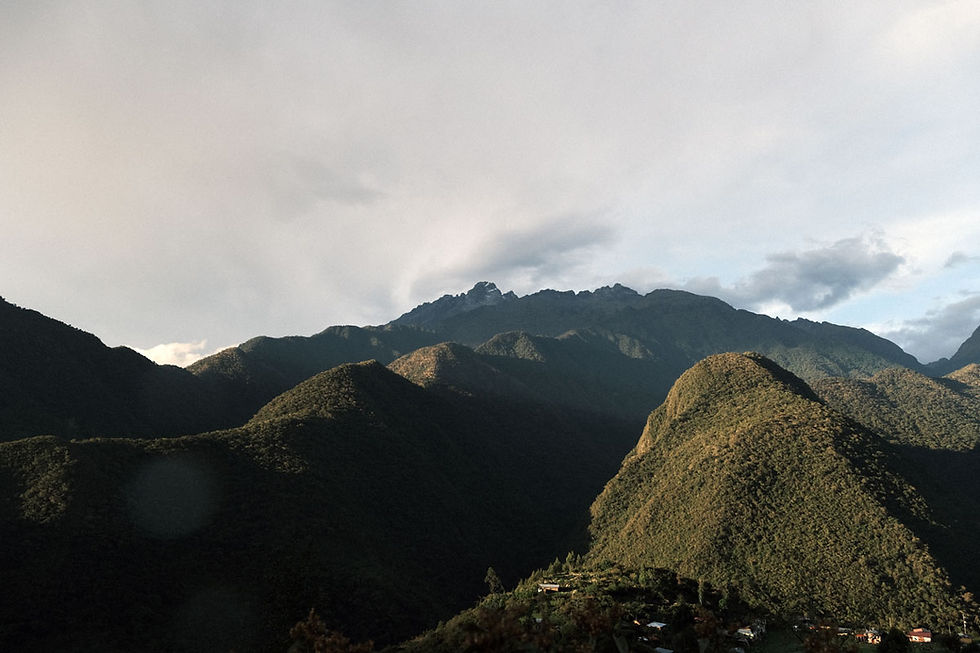
Travelling there is a two-day trip from any of the closest airports. The road is wild: you climb mountain ranges up to 4,300 meters, cross plateaus where alpacas roam, then descend into tropical villages with lush mango plantations and rivers rushing through. The scenery is framed by snow peaks over 5,000 meters. Peru is truly a land of contrasts.
Incahuasi is a unique place, unlike anything we have ever experienced. Producers usually have just around 2 hectares of farmland at an altitude of 2,000–2,500 meters above sea level. Everyone farms organically, adding only seabird guano as a fertiliser. The farms share characteristics with some Ethiopian forest farms, with low-intervention cultivation and an abundance of shade trees. The best performing varieties are mainly Geisha, Typica, a natural mutation named “Americano” and an as-yet-to-be-genetically-determined SL-9 mutation that many producers refer to as Geisha Inca. You also see Catimors and classic Arabicas, some carrying local names after natural mutations were discovered and propagated. Many producers told us that their Catimors are prone to fungus, but Geisha and SL-9 thrive and yield well. This is probably due to the altitude and shade, as Catimor is designed to yield well in direct sunlight and lower altitudes.

Being a secluded and densely cultivated valley, these natural mutations are prone to happening. It brings a special kind of complexity to the coffees that we haven’t tasted elsewhere. The best SL-9/Geisha Inca lots have an intense and complex litchi flavor that we absolutely love.
The cup profiles are some of the most complex, clean, and delicate we have ever tasted. At the cooperative headquarters, we cupped multiple lots close to 90 points, which is extremely rare. The majority of the producers process the coffee as dry fermented washed, using wooden crates to ferment the pulped parchment and uncovered African tables for drying. There are no sophisticated measurement tools or monitoring systems available, just decades of multi-generational experience.
We will publish a more in-depth story and footage on our website soon.
Most importantly, we will have a collection of amazing lots on our menu in the first half of 2026.

